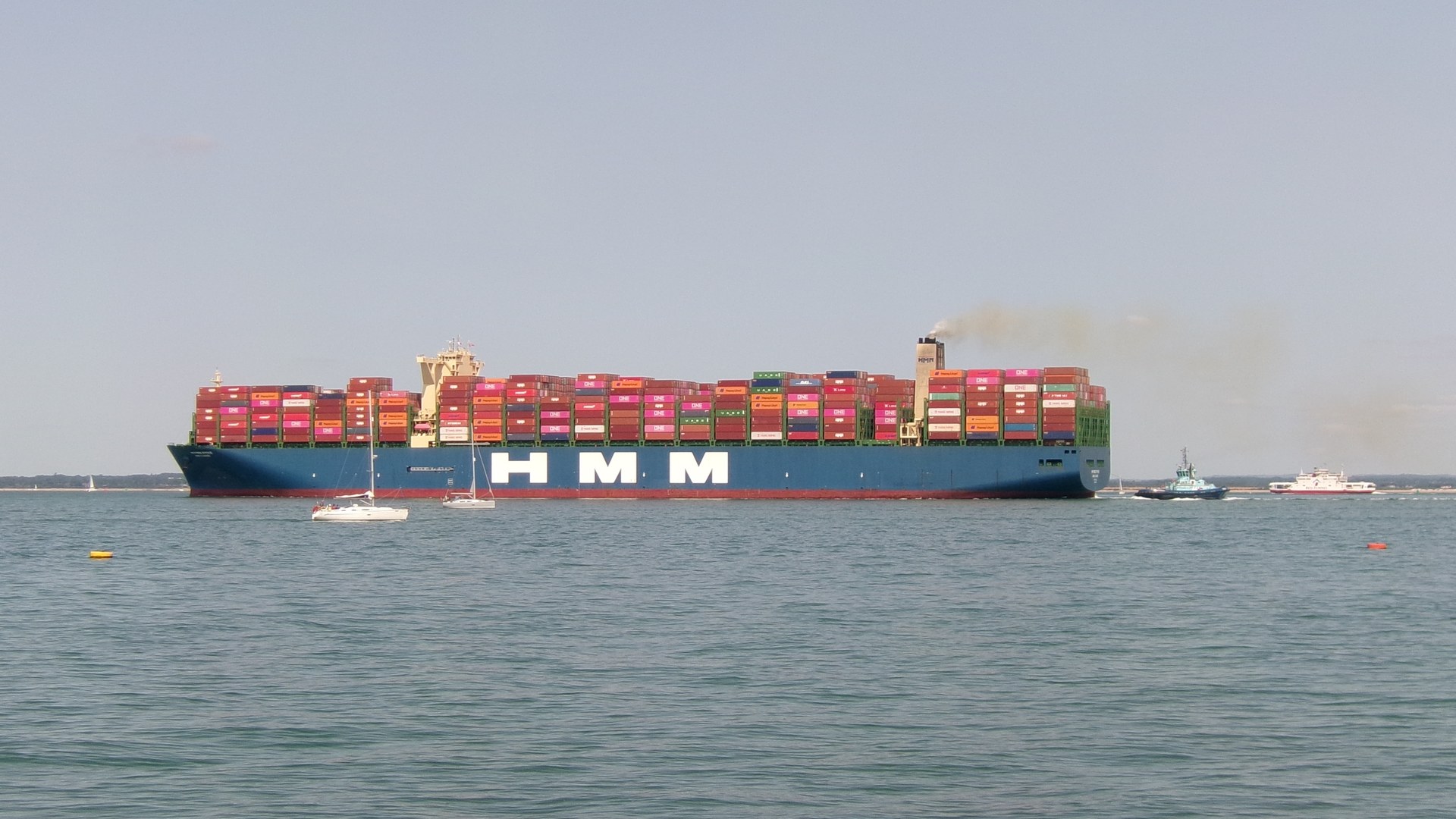
Photo: ITookSomePhotos · File:Container ship "HMM Le Havre" in the Solent, England.jpg · CC BY 4.0
U.S. Trade Representative Jamieson Greer appeared on Bloomberg TV on November 20 and said when an investigation would be completed. It is a Section 301 investigation into overcapacity in 16 economies, including Korea. Under Section 301 of the Trade Act, the U.S. administration can respond to unfair foreign trade practices with tariffs. According to Yonhap News Agency, he said "very soon" and that it "will definitely be wrapped up by the end of this year." He did not say which countries would face additional tariffs. According to the Korean government, the United States's position is that it will not raise tariffs on Korea above 15%. But is there any U.S. document stating that the 15% cap also applies to Section 301 tariffs?
Korean goods already carry a tariff from a different Section 301 investigation. According to a notice from the Office of the U.S. Trade Representative (USTR), USTR opened a forced labor investigation into 60 economies on March 12. The reason was that they had no system to block imports of goods made with forced labor and did not enforce one. Korea was found to be one of those countries. From July 24, this tariff has applied to goods from Korea, Japan and Switzerland so that, combined with existing tariffs, the rate comes to 12.5%. Items that carry separate Section 232 tariffs, such as autos and steel, and some exempt items are excluded.
The overcapacity investigation began separately on March 11. Yonhap describes it as a substitute for the reciprocal tariffs that the Supreme Court struck down. The Federal Register notice cited Korea's trade surplus with the United States, which grew to 56 billion dollars in 2024. The export items the notice listed were electronics, autos and parts, machinery, steel and ships. Hearings ended in May, but the findings and tariff action have not yet been published in the Federal Register.
The expected timing of the announcement has shifted several times. According to SBS Biz, Minister of Trade, Industry and Energy Kim Jung-kwan said on August 6 that he expected the announcement within August. The U.S. side had said in late July that it would take three to four weeks. An SBS Biz report on October 1, citing Bloomberg and others, said the announcement had been delayed. A report meant to come out before the September 24 U.S.-China summit was pushed back until after the summit. Yonhap interpreted the year-end completion as a bargaining chip with China. The U.S.-China tariff truce ends in January next year.
The 15% figure appears in a joint fact sheet the two countries released in November last year. The document set 15% for reciprocal tariffs. Reciprocal tariffs were tariffs the president imposed by executive order on Korean goods in general. Separately, it set 15% for Section 232 tariffs under the Trade Expansion Act on autos and parts, lumber and other goods. Section 301 of the Trade Act does not appear in the document.
The reciprocal tariffs, to which the 15% applied, lost their legal basis on February 20. In its ruling, the U.S. Supreme Court said the International Emergency Economic Powers Act, used in emergencies, does not grant tariff authority. How the legal basis for the tariffs changed is covered in an earlier article.
After that, the promise to keep the 15% was exchanged verbally at meetings. According to the Segye Ilbo, Minister Kim held a video meeting with Commerce Secretary Howard Lutnick in June. He said, "I received reconfirmation that no tariffs exceeding the level of last year's tariff agreement will be imposed." According to Weekly Kyunghyang, the government stressed the same point to the United States on July 24. Even with the two Section 301 tariffs combined, the rate must not exceed 15%. The government said the United States had again stated its position that it would honor the existing agreement.
The minister himself said the tariff promise was also left out of the U.S. investment agreement signed in late September. That agreement named a Texas gas power plant as the first investment project. According to iNews24, Minister Kim said this while explaining the negotiations: "Stating tariffs directly in the U.S. investment project agreement was not the right setting, so unfortunately it was left out." But he added, "The U.S. side has stated its position that it will keep the tariff rate at the 15% level, whether under Section 301 of the Trade Act or in any other form."
There were public remarks from the U.S. side as well. According to a Reuters report, Greer said on September 29 that he would consider the tariff caps in trade agreements when deciding the investigation's outcome. He said he takes those agreements seriously. But he said he would not get ahead of the report and the action, and he did not mention the 15% figure.
The room left before 15% is 2.5 percentage points. If the overcapacity tariff is added on top of the current rate, the total would exceed 15% if it is more than 2.5 percentage points. By Minister Kim's account, the path to higher tariffs is in writing. It is the memorandum of understanding (MOU) on strategic investment in the United States signed in November last year. Under it, if Korea pulls out of investment projects, the United States is to retaliate, such as by raising tariffs.
If Greer is right, the findings and action of the overcapacity investigation will come out by year-end. Will the U.S. position the government says it confirmed be carried into those findings as wording on Korea's tariff rate? No document puts a 15% cap on Section 301 tariffs: not the joint fact sheet, not the July USTR notice, and not the September investment agreement.
Sources
- Yonhap News Agency, USTR's Greer says Section 301 investigation to wrap up by year-end, November 21, 2026.
- Office of the U.S. Trade Representative, notice of final action in the Section 301 investigation on forced labor import bans (PDF), July 23, 2026.
- Federal Register, notice initiating Section 301 investigations on structural overcapacity (2026-05214), March 17, 2026.
- SBS Biz, Minister Kim Jung-kwan: "U.S. side's position is to keep the 15% level", October 1, 2026.
- The White House, joint fact sheet on the Korea-U.S. summit, November 14, 2025.
- U.S. Supreme Court, Learning Resources, Inc. v. Trump, February 20, 2026.
- NEXT, More than who wins the U.S. midterms, Korea should watch the documents on the tariff cap and U.S. Forces Korea, October 10, 2026.
- Segye Ilbo, Kim Jung-kwan and Lutnick video meeting: "15% cap reconfirmed", June 4, 2026.
- Weekly Kyunghyang, Government: "U.S. side reconfirms position to observe 15% cap on Korean tariffs", July 24, 2026.
- iNews24, Kim Jung-kwan: "15% line kept even with additional U.S. tariffs", October 1, 2026.
- BusinessWorld (Reuters), Greer: "will consider tariff caps in trade deals", September 30, 2026.
- SBS Biz, Minister Kim Jung-kwan: "U.S. overcapacity investigation results expected later this month", August 6, 2026.
Translated from the Korean original published on November 21, 2026.
Korean original: 15% 넘지 않는다던 한국 관세…미국 연말 추가 관세엔 약속 문서 없어