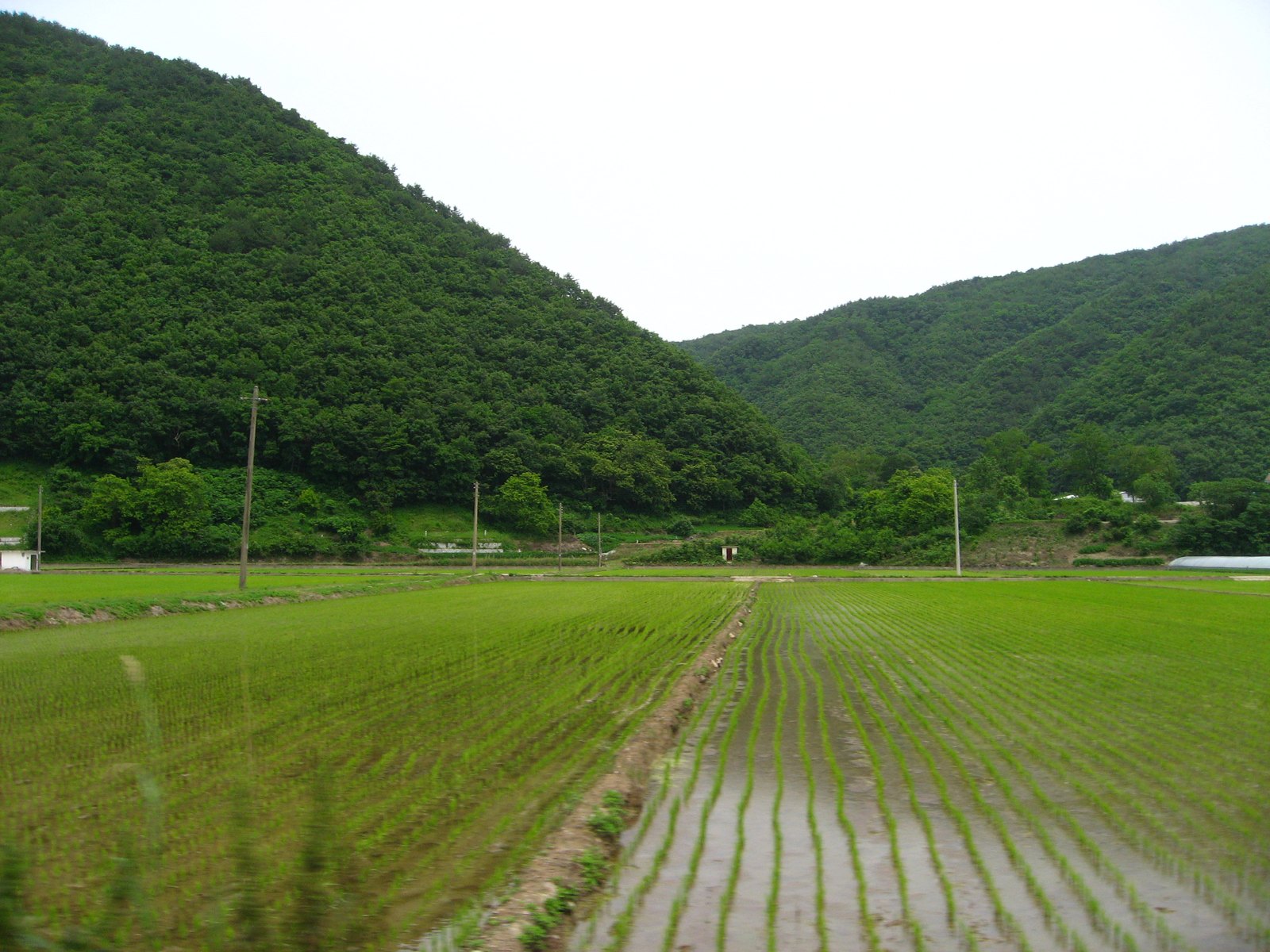
Photo: Andrew Bell · Korea-Gyeongju-Rice field-01.jpg · CC BY 2.0
On November 23, Golden Times reported that the bill review subcommittee of the National Assembly's Agriculture, Food, Rural Affairs, Oceans and Fisheries Committee was scheduled to review the special act on November 24. From October 30 to November 20, lawmakers introduced five bills with the same aim. All of them would, for a set period, allow customary leases that fall outside the exceptions in the Farmland Act. Whether farmers who work rented land can keep farming it depends on this law. Can a temporary exemption of a few years settle leases that the Farmland Act treats only as exceptions?
Farming on rented land is already common. Citing data from the Ministry of Data and Statistics, Nongmin Shinmun reported that 45% of all farmland in 2025 was leased. In a 2002 report by the Korea Rural Economic Institute (KREI), the share was 43.6% in 2000. Farm corporations are no different. According to KREI research reported by Herald Business, 70 to 80% of the farmland that corporations use is leased.
The number of people who will lease out land is set to grow. In the Ministry of Data and Statistics' final results of the 2025 Census of Agriculture, Forestry and Fisheries, the average age of farm operators was 67.7. Of farm operators, 44.1% were 70 or older. The average farm household works 0.87 hectares, smaller than a plot 100 meters on each side. However, this census added administrative records such as the farmland register to its list, which widened the survey's coverage. The ministry therefore advised caution when comparing it with the previous census.
Yet the law treats leasing as an exception, not the rule. Article 121 of the Constitution sets the principle that those who farm should own farmland. Leasing is recognized only in cases defined by law. This principle came from the 1950 land reform. According to the National Archives of Korea, the Farmland Reform Act promulgated in June 1949 took effect after an amended law was issued in March 1950. A KDI School of Public Policy and Management resource says the reform spread wealth more evenly but held back the growth of large-scale commercial farming.
The leases that Article 23 of the current Farmland Act allows are narrow. According to the National Assembly's review report, an individual owner can lease only farmland held for three years or more. That covers leasing to people who want weekend or hands-on farming, or entrusting the land to the Korea Rural Community Corporation. There are exceptions. They include land that a person aged 60 or older has farmed for more than five years, and land temporarily left unfarmed because of illness or military service. According to the proposal rationale of the Yun bill, the nationwide farmland survey found many leases outside this range. Examples are exchange farming, where owners swap plots, and family members living in separate households farming for the owner.
This year the government looked into what lies outside those limits. The amended Farmland Act, in force since August 28, made mandatory the disposal order that tells owners to sell farmland not used for farming. In the first results of the nationwide survey published on Korea.kr, 27% of the parcels surveyed were suspected violations. By type, suspected illegal leasing was the most common at 21.1%. A suspected violation is not a confirmed violation. An in-depth survey that rechecks land in the capital area and land suspected of violations is scheduled to run until December 31.
Relief came alongside the crackdown. On October 6, the Ministry of Agriculture, Food and Rural Affairs said it would "push to enact by the end of the year" a special act. At the same event, it said it would also push to amend the Farmland Act. The special lease rectification period ended on November 15. During that period, the government had decided not to treat as violations farmland held for three years or more that owners entrusted to the Farmland Bank. The Farmland Bank is a public program that takes in land and leases it to people who will farm it.
The bill the ministry wants passed this year was introduced on October 30. It is the Special Act on the Arrangement of Specific Farmland, introduced by Rep. Yun Jun-byeong and nine other lawmakers. In a November 4 post, the ministry said it would work with the National Assembly so that this bill is passed within the year. According to the Bill Information System, the bill was taken up by the standing committee on November 5. On November 12, it was referred to the bill review subcommittee and went through a public hearing. The bill applies to matters that arose by October 31, 2026, and would be in force for three years from April 1, 2027. During that period, farmland with no speculation concerns would not receive disposal orders, nor the enforcement fines imposed for not following them. Farmland owned by individuals could be leased without restriction on the reason.
The law would last three years, but lease contracts signed under it would last much longer. Article 6 of the bill limits contract terms to 10 years and allows one extension of up to 10 more years. Article 8 treats these contracts as valid leases until their terms end, even after the law expires. Chief expert adviser Jeong Dae-young, who wrote the review report, said there is "an aspect in which its validity can be recognized" in the aim of bringing leases into the legal system. Of this provision, he also wrote that it means "recognizing, through a temporary special measures act, farmland ownership and use relationships different from the current Farmland Act for a long period."
The same report raised two concerns. One is that people who do not farm would hold farmland for a long time. That could reduce the chances for actual farmers to buy land. The other is fairness to those who have obeyed the law. On the form of a special act, the report wrote: "Rather than granting a temporary exemption that defers dispositions for customary leases and the like, improving the system by amending the Farmland Act appears appropriate."
Bills introduced later added provisions on the side of those who farm rented land. The bill by Rep. Song Ok-joo and nine others would set up farmland rectification committees in cities, counties and districts to review lease contracts between individuals. The bill by Rep. Shin Jang-sik and 10 others would require owners to contract first with the person currently farming the land and would shorten the law's validity to one year. The bill by Rep. Lee Jae-kwan and 11 others would require asking existing farmers first whether they want a contract. The bill by Rep. Lim Mi-ae and nine others also states in its rationale that it gives priority to protecting existing farmers' continued farming. According to MTN, groups including the Hansalim Federation and the Korean Peasants League held a press conference in front of the National Assembly on November 12. They demanded a full revision of the Yun bill, saying it does not adequately protect tenant farmers' rights.
Another approach pools land by entrusting it to a corporation without selling it. According to Maeil Shinmun, 80 farm households in Yeongsun-myeon, Mungyeong, North Gyeongsang Province, have entrusted 110 hectares to a farming association corporation since June 2023. Households receive dividends according to the area they entrusted, and the corporation decides what to plant. According to Kyungbuk Maeil, the corporation's 2024 earnings (total revenue minus operating costs) were 2.3 billion won. According to Metro Seoul, the Ministry of Agriculture, Food and Rural Affairs plans to foster 100 such joint farming corporations by 2030.
Some research says pooling land is not enough. In a 2011 report, KREI research fellow Park Seok-doo and colleagues wrote that it was time to revisit policies that pool land from elderly and small farmers into large farms. Japan created farmland intermediary management institutions in 2014 to pool land. According to Japan's Ministry of Agriculture, Forestry and Fisheries, the share of farmland worked by core farmers who will carry on farming was 60.4% in fiscal 2023.
The bills already differ on validity, from three years to one. If the Yun bill takes effect as written, the law would expire at the end of March 2030. Would a new lease signed after that become a Farmland Act violation again? Will the Farmland Act amendment the government said it would also pursue cover the scope of permitted leasing? The in-depth survey is scheduled to end on December 31. Rented land makes up nearly half of farmland. Yet the bills before the National Assembly accept this reality through an exemption of a few years outside the Farmland Act.
Sources
- Golden Times, Rep. Shin Jang-sik's special act bill and the subcommittee review scheduled for November 24, November 23, 2026.
- National Assembly Secretariat Open Assembly Information, "Bills introduced by lawmakers" list (22nd National Assembly, five results for bill name "특정농지": bill nos. 2222342, 2222849, 2223021, 2223029, 2223100), accessed November 23, 2026.
- Bill Information System, Special Act on the Arrangement of Specific Farmland (Rep. Yun Jun-byeong and 9 others, bill no. 2222342), rationale, main points and review status, introduced October 30, 2026.
- Jeong Dae-young, chief expert adviser to the Agriculture, Food, Rural Affairs, Oceans and Fisheries Committee, review report on the Special Act on the Arrangement of Specific Farmland (overall review pp. 8 to 13, Article 6 pp. 24 to 26, Article 8 p. 28), November 2026.
- Bill Information System, Special Act on the Arrangement of Specific Farmland (Rep. Song Ok-joo and 9 others, bill no. 2222849), introduced November 17, 2026.
- Bill Information System, Special Act on the Arrangement of Specific Farmland (Rep. Shin Jang-sik and 10 others, bill no. 2223021), introduced November 19, 2026.
- Bill Information System, Special Act on the Arrangement of Specific Farmland (Rep. Lim Mi-ae and 9 others, bill no. 2223029), introduced November 20, 2026.
- Bill Information System, Special Act on the Rectification of Specific Farmland (Rep. Lee Jae-kwan and 11 others, bill no. 2223100), introduced November 20, 2026.
- Nongmin Shinmun, 45% of all farmland is "rented land", August 27, 2026.
- Korea Rural Economic Institute, "Changes in Farmland Ownership and Use Structure and Policy Tasks", December 2002.
- Herald Business, KREI on farmland use by farm corporations, July 25, 2026.
- KDI Economic Information and Education Center, Ministry of Data and Statistics "Final results of the 2025 Census of Agriculture, Forestry and Fisheries" (explanatory notes, summary p. iv, operator age), September 29, 2026.
- Korea Law Information Center, Article 121 of the Constitution of the Republic of Korea.
- National Archives of Korea, major policies, "Land reform".
- K-Developedia (KDI School of Public Policy and Management), Forging an Economy from Chaos.
- Korea.kr, announcement of farmland survey progress and plans, July 30, 2026.
- NEXT, first results of the nationwide farmland survey and the Farmland Act amendment, October 2, 2026.
- Ministry of Agriculture, Food and Rural Affairs, press release on the forum on the direction of the special farmland act, October 6, 2026.
- Kukmin Ilbo, deferral of disposal for land entrusted to the Farmland Bank and extension of the special lease rectification period, September 21, 2026.
- Ministry of Agriculture, Food and Rural Affairs, "Questions about the farmland survey", November 4, 2026.
- MTN, farmer groups' press conference demanding revision of the special act bill, November 12, 2026.
- Maeil Shinmun, first dividend of the Neulbom farming association corporation in Mungyeong, December 27, 2023.
- Kyungbuk Maeil, additional dividend from joint farming in Yeongsun, Mungyeong, September 6, 2024.
- Metro Seoul, plan to foster 100 joint farming corporations, October 22, 2025.
- Korea Rural Economic Institute, agricultural structure policy report by Park Seok-doo and others, November 30, 2011.
- Japan Ministry of Agriculture, Forestry and Fisheries, farmland consolidation to core farmers in fiscal 2023, June 12, 2024.
Translated from the Korean original published on November 23, 2026.
Korean original: 3년 한시 농지 특별법안인데 임대 계약은 최장 20년…농지법은 그대로