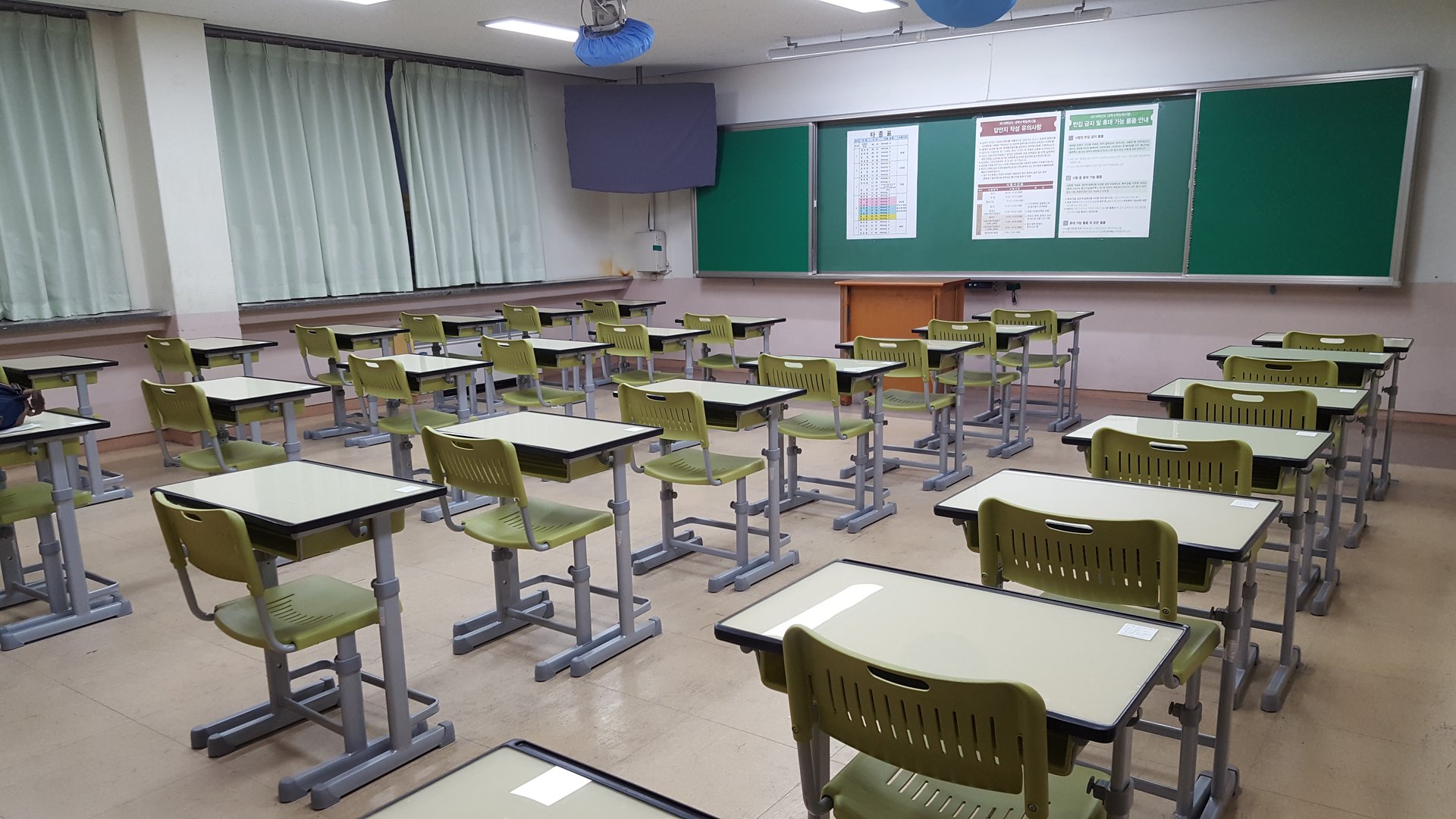
Photo: 고려 · The exam location (Puhung High School), for The South Korea College Scholastic Ability Test, 2018.jpg · CC BY 4.0
The Ministry of Education said on November 23 that it would run its CSAT cheating report center with no deadline. Shin Jin-yong, director of the ministry's college admissions policy division, said, "Things that happened on previous CSATs can also be reported." If cheating by a test taker from last year comes to light late, that year's university admissions could change. The ministry also said the question of changes to admitted students needs review. But how many of last year's test papers still exist?
On the same day, Rep. Jeong Seong-guk of the People Power Party released disposal data obtained from five education offices. In Gangwon Province, five exam districts, the areas that administer the test, had held 108,181 of last year's test papers. All of them had been destroyed as of November 18. Jeju had destroyed 4,050 papers, North Jeolla 1,309 and South Chungcheong 193. In South Gyeongsang, three schools destroyed all their test papers, and the number of copies is still being tallied.
The scale of disposal could grow beyond the figures from the five offices. The Gyeonggi, Incheon and Jeonnam-Gwangju education offices also told Jeong's side orally that schools had shredded test papers. The number of copies and the dates for these three have not yet been made public.
Not all disposal, however, breaks the rules. The retention period for test papers is one year from the exam date, and last year's CSAT was held on November 13, 2025. The ministry said at a briefing, "Disposal between the 13th and the 18th is not illegal." According to the ministry, schools usually clear storage space in time for the next CSAT. It said some schools may have destroyed papers ahead of time because this year's exam was six days later. The public data give no disposal date for Gangwon's 108,181 papers, so they cannot be sorted into before or after the deadline.
Among schools with dates in the five offices' data, 11 destroyed papers before the deadline. Six schools in Jeju destroyed 3,048 papers, three in North Jeolla destroyed 1,040 and one in South Chungcheong destroyed 193, all before November 13. These 10 schools with published counts alone add up to 4,281 papers (NEXT calculation). The remaining school, in South Gyeongsang, destroyed all its papers on November 2, and its count is still being tallied. The earliest, a school in North Jeolla, finished disposal on August 21. That was 84 days before the November 13 deadline (NEXT calculation).
The one-year retention period does not appear in the Ministry of Education's directive. The CSAT Administration Regulations, the standard for running the exam, say superintendents of education store test papers in a suitable place. They leave other storage matters to be settled through consultation among the bodies administering the exam. The directive mentions neither a retention period nor the word disposal. According to the Seoul Shinmun, the provision for disposal after one year of retention is in the work guidelines below the directive.
The instruction to keep papers longer came after the one-year retention period had ended. On November 18, the ministry sent education offices nationwide an official notice saying, "Please keep the 2026 academic year CSAT test papers until separate measures are taken." The 2026 academic year CSAT is the exam held last November, and the notice went out five days after the deadline. On November 19, the day of this year's CSAT, Prime Minister Han Seong-sook also ordered that the papers remain in storage. The ministry said the test papers it asked to have kept are being kept.
The absence of test papers does not close off every way to confirm cheating. The ministry said test papers are one of several materials and that cheating can be checked by other routes. The Korea Institute for Curriculum and Evaluation replied to Jeong's office that it would preserve last year's OMR answer sheets. Even when test papers remain, some test takers leave few written workings, so handwriting traces alone cannot determine cheating.
OMR answer sheets, however, record only the answers chosen. The working for math or science questions does not appear on them. A test paper with a correct answer and no sign of calculation could be a clue for narrowing down suspicious cases. If some schools kept papers and others destroyed them, the same report would have different materials to check against.
The ministry said it would check further how much each education office has destroyed. How will the ministry deal with schools that destroyed test papers before the deadline? If reports have no deadline, how many years will test papers be kept? The ministry widened the scope of reports to all past CSATs, but the test papers it asked to have kept under the November 18 notice are those from the 2026 academic year.
Sources
- Yonhap News, Ministry of Education regular briefing on November 23 (report center operation), November 23, 2026.
- Yonhap News, Rep. Jeong Seong-guk's data on test paper disposal from five education offices, November 23, 2026. The pre-deadline disposal total adds the school-level dates and counts in this article (NEXT calculation).
- Sankyung Ilbo, Ministry of Education briefing (explanation of disposal between November 13 and 18), November 23, 2026.
- Wikitree, Korea Institute for Curriculum and Evaluation reply on preserving OMR answer sheets, November 23, 2026.
- National Law Information Center, CSAT Administration Regulations (Ministry of Education Directive No. 558), Article 9, in force March 5, 2026.
- Seoul Shinmun, one-year retention provision in the CSAT work guidelines, November 16, 2026.
Translated from the Korean original published on November 24, 2026.
Korean original: 지난 수능 부정도 신고받는다더니…시험지 기한 전 폐기 확인된 학교 11곳