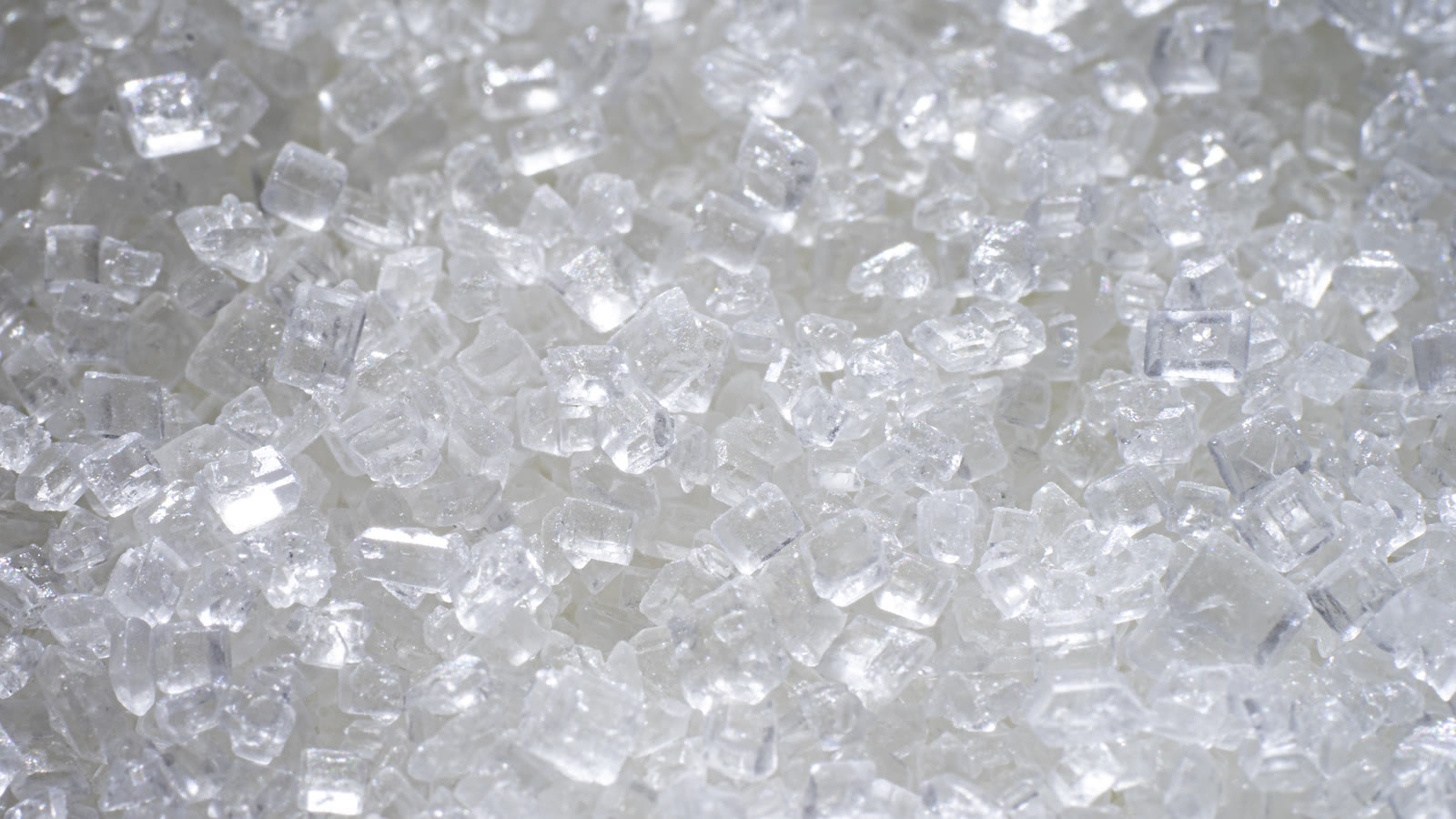
Photo: Tobias Erbsland · File:Granulated White Sugar with Large Crystals, Bright Front Light.jpg · CC BY-SA 4.0
The government will discuss next year's tariff quota plan at an emergency economic ministers' meeting on November 25. A tariff quota applies a tariff up to 40 percentage points below the basic rate, but only for a set period and volume. The government also uses it for groceries such as sugar and bananas. Whether supermarket prices fall by as much as the tariff cut matters to the people who do the shopping. Will items whose consumer prices did not fall after tariff cuts stay in next year's plan?
According to the Ministry of Finance and Economy's weekly schedule reported by Edaily, the agenda that day is the "2027 regular flexible tariff operation plan." Tariff quotas are part of this plan. Its contents have not yet been announced.
The tariffs the government forgoes under this plan have grown almost fourfold in four years. According to estimates by the National Assembly Budget Office (NABO), revenue lost to tariff quotas rose from 374.2 billion won in 2020 to 1.4301 trillion won in 2024. That equals 20.5% of the tariffs collected in 2024.
The Customs Act sets out a procedure for assessing the effect of tariff cuts. Within five months after the fiscal year ends, the Minister of Finance and Economy reports the previous year's results to the relevant standing committee of the National Assembly. The report includes a study that examines and analyzes the effects. The deadline for the report on tariffs cut in 2025 was the end of May this year.
The item-by-item results of the analysis for 2025 became public through parliamentary audit materials. Lim Mi-ae, a Democratic Party of Korea (DP) lawmaker, obtained the report from the Ministry of Finance and Economy. According to a Yonhap News Agency report, tariff reductions on 10 food items with price data totaled 158.6 billion won. Of these, only three items, pineapples, mangoes and oranges, showed a confirmed effect of lowering consumer prices.
The other seven items showed no confirmed effect on consumer prices. Bananas, which had the largest reduction at 56.3 billion won, saw wholesale prices fall 33.9%. But the retail price last December was 3,333 won per kg, not much different from the peak of 3,407 won cited in the report. Besides bananas, sugar, frozen pork, potatoes and modified starch, processed egg products, carrots and radishes received the same finding.
Sugar is an item that showed no price-lowering effect in both the 2024 and 2025 analyses. NABO summarized the 2024 analysis this way. Even when sugar import prices fell, domestic factory prices and price indexes did not move in a statistically clear way. Yet this year's tariff quota plan, released on December 2 last year, raised the volume of sugar eligible for the tariff cut from 100,000 tons to 120,000 tons. As the reason for the increase, the government wrote that it seeks "to promote domestic competition and stabilize prices."
The press releases on the plans do not show the results of the effect analyses. The press releases for the 2025 plan and this year's plan listed items, rates, volumes and support amounts. Neither contains the previous year's analysis results. Neither explains how those results were used to choose the items. In June last year, NABO pointed out that only a summary of the commissioned research is submitted to the National Assembly in writing. It said this makes it hard to verify the basis and models of the analysis.
The government says this does not mean the cuts have no effect. According to an October 22 explanatory press release from the Ministry of Finance and Economy and the Ministry of Agriculture, Food and Rural Affairs, domestic prices of energy, imported fruit and feed ingredients fell fairly clearly when import prices fell. For some foods, other factors such as inventories and distribution margins were large, so the effect did not show clearly. The two ministries also quoted a sentence from a Korea Institute of Public Finance report. It said such cases are best seen as the effect being "partly absorbed or diluted."
The measure the two ministries put forward is managing the distribution of imported goods. According to the same release, the government designated items for intensive management in an institutional improvement plan in February. It required importers to move goods out of bonded areas, where goods are held before customs clearance, within a set deadline. If a company breaks this rule, the recommending agency can cancel its import recommendation. Volumes whose recommendation is canceled do not receive the tariff quota rate. According to Yonhap, the Korea Customs Service said it caught 10 companies in violations worth 546.8 billion won.
This measure deals with managing the release and distribution of imported goods. The release does not say how the analysis results are used when deciding which items get tariff cuts. NABO recommended removing low-effect items from the following year's list or reducing their reduction rates and volumes. Bananas again received a tariff quota this year from February 12. In June, the government extended that period to August 15. Frozen pork (excluding pork belly) receives it from May 29 to the end of the year.
The November 25 plan is the first regular plan discussed since the reporting deadline passed. Will sugar and the six other items that showed no effect stay in next year's plan? If they stay, will the government release the analysis results as the basis? The government cited price stability when it raised the sugar volume, but it did not explain how that fits with the 2024 analysis results.
Sources
- Edaily, Ministry of Finance and Economy weekly schedule (emergency economic ministers' meeting on November 25, 2027 regular flexible tariff operation plan), November 22, 2026.
- National Assembly Budget Office, "Tariff Quota Operations and Tasks for Improvement," NABO Focus No. 114, June 24, 2025.
- Korea Law Information Center, Customs Act Article 71 (tariff quotas), in force from October 2, 2026.
- Yonhap News Agency (via Financial News), "158.6 billion won in tariff quota reductions, but limited price-lowering effect", October 22, 2026.
- Ministry of Finance and Economy, press release on next year's tariff quotas supporting livelihoods and industrial competitiveness, December 2, 2025.
- Ministry of Economy and Finance (now the Ministry of Finance and Economy), press release on continued tariff quota support for livelihoods and economic vitality, December 2, 2024.
- Ministry of Finance and Economy and Ministry of Agriculture, Food and Rural Affairs, explanatory press release on the price stabilization effect of tariff quotas, October 22, 2026.
- Ministry of Agriculture, Food and Rural Affairs, Notice No. 2026-383, tariff quota recommendation guidelines for items under its jurisdiction (bananas, frozen pork), June 30, 2026.
Translated from the Korean original published on November 22, 2026.
Korean original: 관세 혜택은 20% 더, 설탕값은 안 내렸다