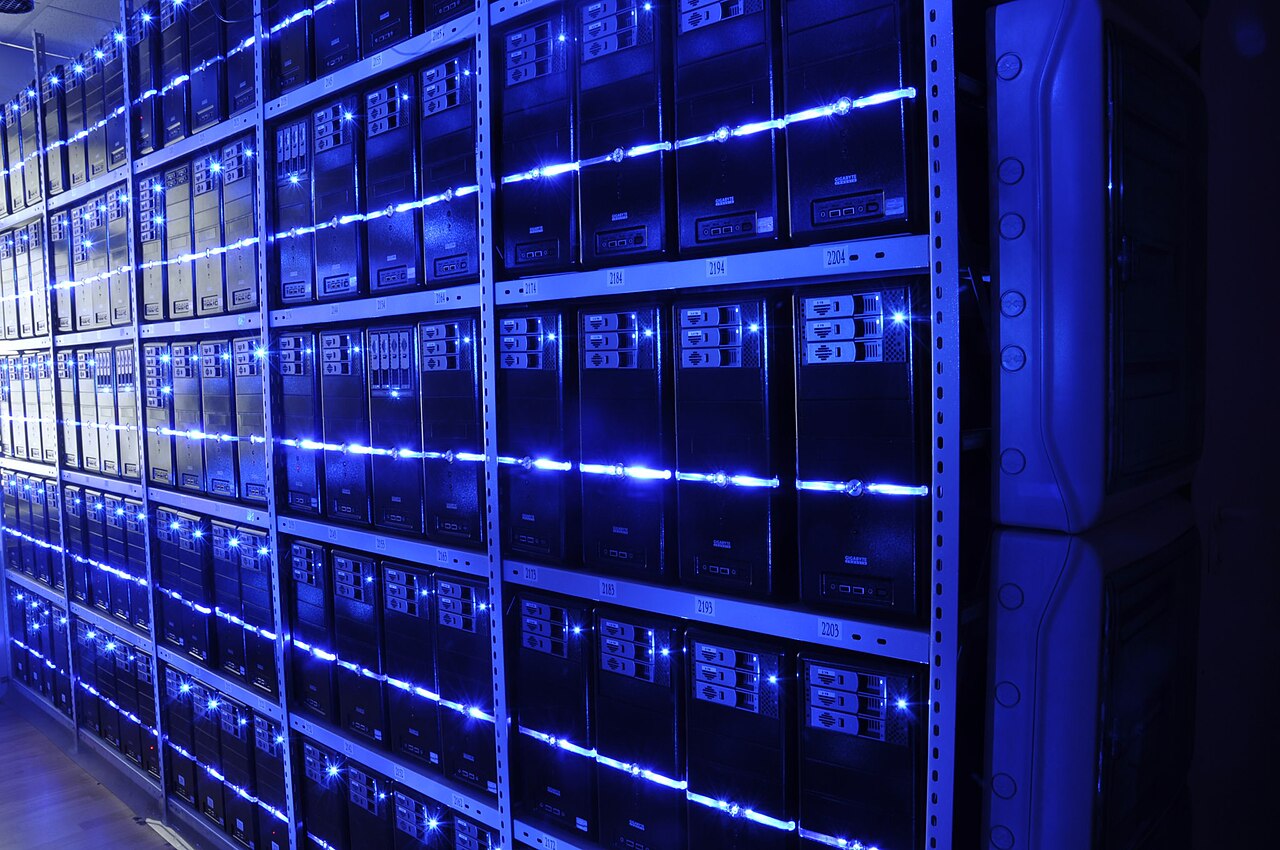
Photo: BalticServers.com · File:BalticServers data center.jpg · CC BY-SA 3.0
Samsung Securities announced on November 23 that attachments belonging to 8,241 customers had leaked from the Voice of Customer submission service on its website. An unauthorized outsider accessed the service on the afternoon of November 21. The 13 exposed items include names, account numbers, addresses, contact details and driver's license numbers. Any customer who has attached a file while filing a complaint with Samsung Securities could be affected. Were those files encrypted? How long did they stay on the server?
The scope of the damage is limited to people who submitted feedback through Voice of Customer. According to Yonhap News Agency, the company said customers who did not submit anything are not affected. The exposed items vary by person, and customers can check their own through a leak lookup menu on the website. The company blocked the access address, suspended the service and reported the incident to the Financial Supervisory Service (FSS) and the Korea Internet & Security Agency (KISA). It also said it would compensate customers under the law and its internal standards if the investigation confirms actual harm.
The notice does not state the encryption status of the attachments. Daishin Securities, which was hacked earlier, listed its leaked items on October 28 and added "(encrypted)" after deposit and withdrawal account numbers and mobile phone numbers. The list of exposed items in the Samsung Securities notice carries no such label.
Driver's license numbers are information that the rules specifically require to be encrypted. A regulatory notice from the Personal Information Protection Commission (PIPC) requires the driver's license numbers and account numbers of online service users to be stored in encrypted form. The Regulations on Supervision of Credit Information Business, which apply to financial companies, set the duty to encrypt personal identifiers such as driver's license numbers according to where they are stored. Data kept in an internet-facing zone, or in the intermediate zone between the internet and the internal network, must be encrypted. For data kept inside the internal network, the company can analyze the risk and decide whether to encrypt.
But the Samsung Securities notice does not say where the attachments were stored, either. The text of the PIPC regulatory notice has no wording that specifically addresses numbers inside photos or scanned copies.
There is a precedent of the PIPC imposing a penalty surcharge over leaked copies of ID cards. In April, the PIPC imposed a surcharge of 3.537 billion won on KS Korea Employment Information. In that case, a hacker downloaded about 50,000 personnel files, including copies of ID cards. The violations included storing resident registration numbers in those documents without masking or encrypting them. However, resident registration numbers must be encrypted even when stored on an internal network, so the precedent cannot be applied directly to driver's license numbers.
Still, the fact of a leak alone does not show that the files were unencrypted. Even when a file is stored in encrypted form, an intruder who uses the service's file-viewing function can take the decrypted content. The Samsung Securities privacy policy says "important personal information (resident registration numbers, account numbers, etc.) and passwords are encrypted for storage and management." The policy does not say whether this sentence covers Voice of Customer attachments.
The privacy policy also does not separately state how long attachments are kept. Under the policy, financial transaction information is retained for up to five years after a transaction ends. It also says information judged necessary to fulfill obligations such as complaint handling may not be destroyed. The notice does not show how many of the 8,241 people had complaints that were closed long ago.
The intrusion came while financial authorities were inspecting security across the financial sector. The Financial Services Commission (FSC) said on November 5 that it would inspect the external access points of about 580 financial companies. The inspection covers "customer-facing services such as websites." It is scheduled to run through November 30 or December 31, depending on the system. The FSC said vulnerabilities found in the inspection would be handled "as flexibly as possible," on the premise that they are fixed immediately. By contrast, it said it would hold companies strictly accountable for incidents that occur after the inspection.
Samsung Securities was also sanctioned over website security in 2023. According to News Tomato, the PIPC imposed a surcharge of 98 million won and an administrative fine of 3.6 million won on Samsung Securities in March of that year. The grounds were a web server configuration error on an investment education site and lax access control. The company said at the time that the matter "did not lead to any actual leak of customer information."
Did Samsung Securities encrypt Voice of Customer attachments when storing them? When does it delete files from closed complaints? What the 8,241 people can learn from the November 23 notice stops at which items were exposed.
Sources
- Samsung Securities, notice of personal (credit) information leak, November 23, 2026. Time of intrusion, 8,241 people, 13 items.
- Yonhap News Agency, "Samsung Securities' Voice of Customer hit by hacking; personal data of more than 8,000 leaked (comprehensive)", November 23, 2026. Scope of damage, agencies notified.
- CEO Score Daily, items leaked at Daishin Securities, October 28, 2026. Encryption labels by item.
- National Law Information Center, Standards for Measures to Ensure the Safety of Personal Information, Notice No. 2026-9, effective July 1, 2026. Article 7.
- National Law Information Center, Regulations on Supervision of Credit Information Business, Appendix 3, amended August 13, 2026. Section II-3, encryption of personal credit information.
- Samsung Securities, privacy policy, amended April 24, 2025. Article 4 on retention periods, technical measures.
- SBS Biz, PIPC sanctions on Duo, KS Korea Employment Information and Geumneung Park Cemetery, April 23, 2026.
- Financial Services Commission, press release on the plan to overhaul security across the financial sector, November 5, 2026. Inspection targets and schedule, supervisory principles.
- News Tomato, "Securities firms: 50,000 data leaks in five years". The March 2023 sanction on Samsung Securities and the company's explanation.
Translated from the Korean original published on November 24, 2026.
Korean original: 민원 넣으며 올린 운전면허번호 샜는데…삼성증권 공지엔 암호화 여부 없어