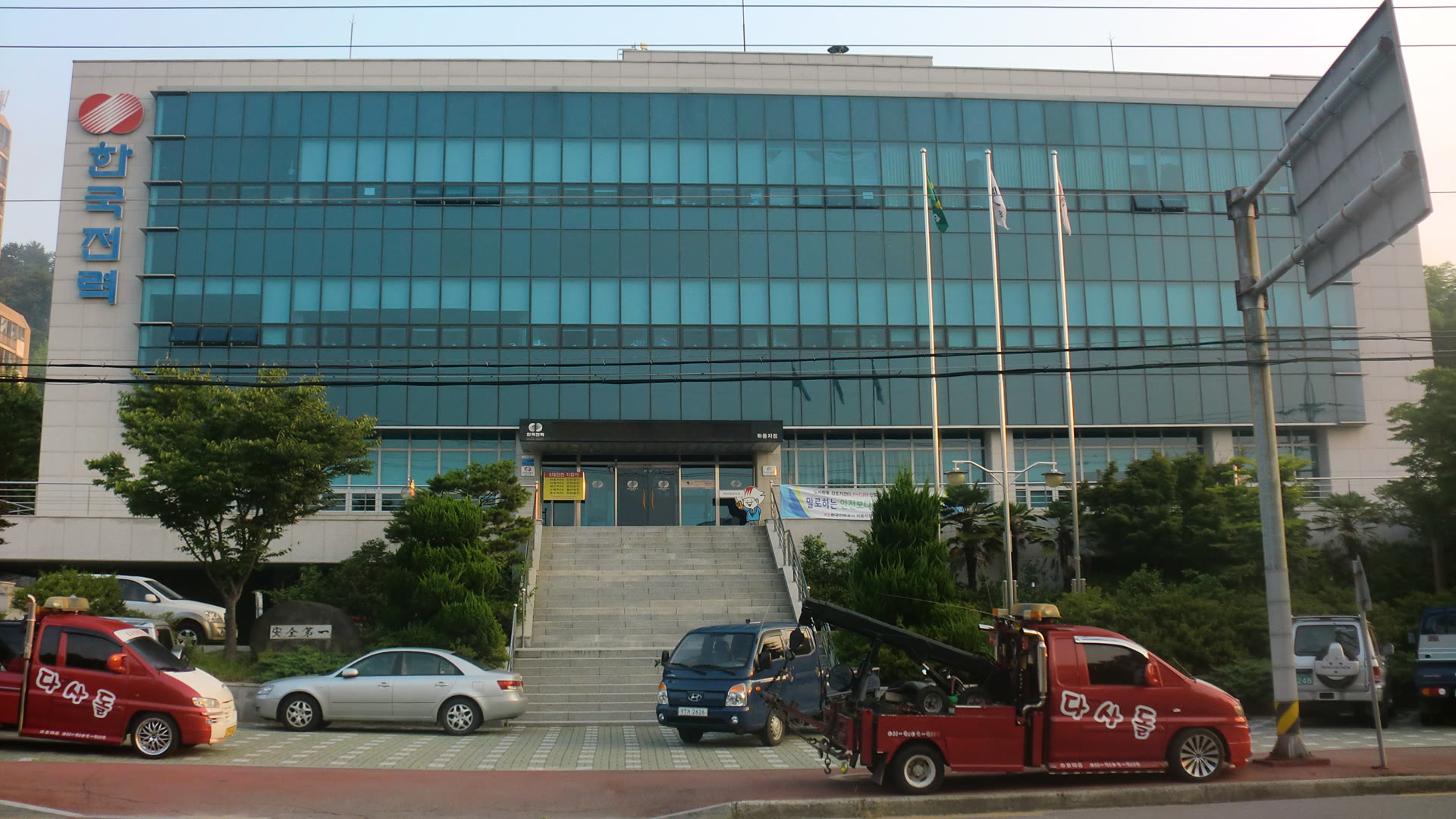
Photo: hyolee2 · Korea Electric Power Corporation Hadong branch.JPG · CC BY-SA 3.0
Korea Electric Power Corporation (KEPCO) said on November 22 that personal data on about 1.52 million people, by simple addition, leaked from two of its systems. On KEPCO ON, the platform customers use to pay their bills, the leaked items for 650,487 customers included resident and foreign resident registration numbers, account numbers and card numbers. In October, after employee data was exposed online, CEO Kim Dong-cheol apologized at a parliamentary audit and said, "We will pursue fundamental innovation across all of our information security work." A month after that promise, how did KEPCO find out about this leak?
This leak came from two systems. On KEPCO ON, data on 7.1% of its 9.2 million users leaked. On the electronic procurement system (SRM), used by companies that bid for contracts, all 869,761 users are counted. KEPCO said it was hard to pin down the scope for each person, so it treated all users as affected. For 426,827 company representatives, resident and foreign resident registration numbers were also included. The net number of victims, after removing overlap between the two systems, has not been released.
The SRM leak was confirmed only the day after a post appeared on the dark web. According to KEPCO's account reported by News1, the two leaks were found in different ways. At around 4:30 p.m. on November 20, KEPCO ON slowed down. While looking for the cause, KEPCO found that customer data had leaked. The SRM case started from the dark web. On November 19, a post on a dark web forum claimed to have KEPCO user data and bidding documents. The next day, KEPCO had outside experts analyze it and confirmed the leak from sample data.
A KEPCO official told Yonhap News, "We believe the leaker extracted the information one record at a time and then stopped at some point." KEPCO thinks the leaker took records one by one and stopped at some point. But it has not said when the leak began. Its apology said some functions it had offered for customer convenience became targets of the attack.
The October incident was also first reported from outside KEPCO. According to KEPCO, the Gwangju branch of the National Intelligence Service (NIS) notified it on October 1. The notice said employee data was posted on a web page of a private cloud service. According to Energy Daily, KEPCO gave this answer to People Power Party lawmaker Yoon Jae-ok: the page's access count and download records "were not separately logged, so they cannot be verified." A KEPCO official said at the time, "Customer information other than employees' is managed safely and separately in a dedicated system."
The measures KEPCO offered at the audit were a full overhaul of how it manages contractors and stronger security. At the time, the NIS, the Personal Information Protection Commission (PIPC) and the police were investigating both a leak through contractors and possible outside hacking. The November 22 announcement lists no measures changed since October. It includes a plan to review security going forward. KEPCO suspects this incident was an intrusion by an outside attacker. A KEPCO official said, "Whether it was the same method as last month's employee data leak is under investigation."
KEPCO had a legal basis for holding customers' resident registration numbers. Article 24-2 of the Personal Information Protection Act bans processing resident registration numbers except where laws allow it and in other set cases. Under the Enforcement Decree of the Electricity Business Act, an electricity seller such as KEPCO may process resident registration numbers when unavoidable for billing and collecting charges. Paragraph 2 of Article 24-2 of the Personal Information Protection Act requires that the numbers be encrypted and stored safely so they do not leak.
According to a report by Aju Business Daily, resident and foreign resident registration numbers and card numbers were stored in encrypted form. Yet KEPCO listed both numbers as leaked items. It has not said whether the numbers that left were ciphertext or decrypted. It has also not said whether account numbers were encrypted. The attacked functions and the route are also under investigation.
Judging only by the reported timing, notification and reporting fell within the legal deadlines. The enforcement decree requires notifying the affected people within 72 hours of learning of a leak. If urgent blocking steps are needed, notice can come after that. If data on 1,000 or more people leaked, if unique identifiers such as resident registration numbers leaked, or if the leak came from illegal outside access, a report to the PIPC is also due within 72 hours. KEPCO confirmed the leak on November 20 and reported it to the PIPC. On November 22, it said it had finished sending individual notices to customers whose data was confirmed leaked.
Whether a fine is imposed, and how large, will be decided after the PIPC investigation. The law allows fines when data leaks, except when the full set of safety measures was in place. The cap is generally 3% of total sales, calculated after excluding sales unrelated to the violation. Where there are no sales and in similar cases, the cap is 2 billion won. For cases such as a repeat violation by intent or gross negligence within three years of a fine, or failure to follow a corrective order, the cap rises to 10% or 5 billion won. In May, the PIPC fined the Ministry of the Interior and Safety 273 million won over leaks including one from Government24.
Which functions of KEPCO ON and SRM did KEPCO review after October? Did the resident registration and card numbers leave as ciphertext or decrypted? KEPCO has asked the police to investigate and is examining the intrusion route with the NIS and others. A month after the "fundamental innovation" pledge, the KEPCO ON customer data leak still came to light only after the site slowed down.
Sources
- Yonhap News, KEPCO leaks about 1.52 million records of personal data including customers' resident and account numbers (comprehensive), November 22, 2026. Number affected, 12 items, 7.1% of 9.2 million users, all SRM users counted, discovery on November 20, audit remarks.
- Yonhap News, Is my data among the 1.52 million records leaked from KEPCO? Concern over secondary damage, November 22, 2026. "One record at a time," individual notices completed.
- News1, KEPCO leaks data on 1.52 million people, including resident, account and card numbers (comprehensive), November 22, 2026. How the leaks were found through slow access and the dark web, "whether it was the same method is under investigation."
- Aju Business Daily, KEPCO leaks personal data of 1.52 million people including customers; damage-prevention steps under way, November 22, 2026. Unique identifiers and card numbers stored encrypted.
- Alpha Economy, KEPCO leaks 1.52 million records a month after pledging security innovation, including account and card numbers, November 22, 2026. Net number excluding overlap between the two systems not calculated.
- CBC News, report on KEPCO's apology, November 22, 2026. Some functions of open services became attack targets.
- Aju Business Daily, KEPCO CEO Kim Dong-cheol apologizes for personal data leak: "Fundamental innovation across information security", October 19, 2026. Parliamentary audit by the Climate, Energy, Environment and Labor Committee, NIS notice, overhaul of contractor management.
- SBS Biz, Data on about 24,000 KEPCO employees exposed: "Customer data managed safely and separately", October 4, 2026.
- [Energy Daily, [Audit] KEPCO employees' facial recognition data and CCTV passwords leaked](https://www.energydaily.co.kr/news/articleView.html?idxno=204165), October 19, 2026. Material submitted to lawmaker Yoon Jae-ok, access and download records.
- Korea Law Information Center, Personal Information Protection Act (Act No. 21445, in force September 11, 2026). Article 24-2(1) and (2), Article 34, Article 64-2(1) and (3).
- Korea Law Information Center, Enforcement Decree of the Personal Information Protection Act (in force November 10, 2026). Article 39(1), Article 40(1) (72 hours).
- Korea Law Information Center, Enforcement Decree of the Electricity Business Act (in force November 10, 2026). Article 62-3(3).
- The Financial News, Personal data leaked from Government24 too; Interior Ministry fined, May 28, 2026.
Translated from the Korean original published on November 23, 2026.
Korean original: 지난달엔 고객정보 안전하다더니…한전 고객 65만 명 주민번호 유출