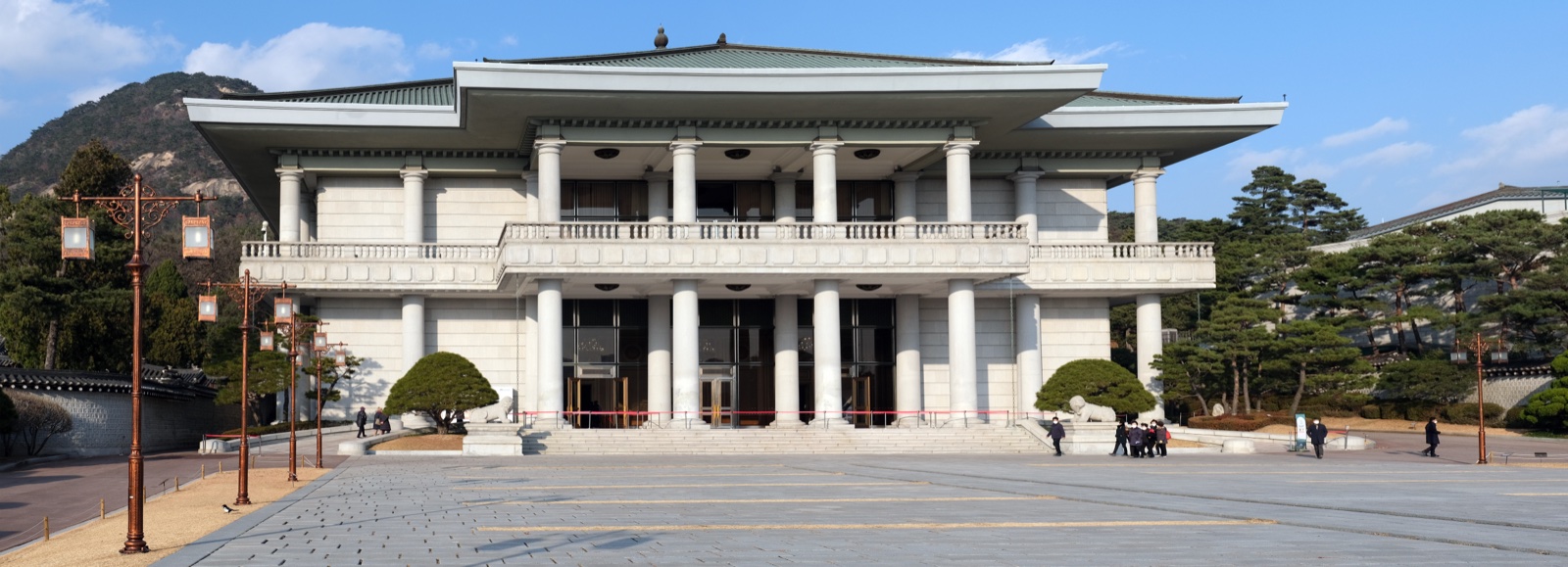
Photo: kallerna · File:Cheong Wa Dae Yeongbingwan.jpg · CC BY-SA 4.0
President Lee Jae-myung wrote again on X on November 21 about the reward for reporting cheating on the College Scholastic Ability Test (CSAT, Korea's national college entrance exam). The post said the reward is "not up to 100 million won but at least 100 million won per case of cheating." He said that, in principle, it would be added up for each person who cheated. He also said that if a cheater confesses and reports accomplices, the cheater's punishment would be reduced and the full reward would still be paid.
Government agencies had explained it differently. On November 18, the Office of the Prime Minister said that if a report is confirmed as cheating, it "plans to pursue paying a reward of up to 100 million won." On November 19, the Anti-Corruption and Civil Rights Commission (ACRC) also said it would pay up to 100 million won per case once an administrative sanction is imposed. On November 17, the president had written that he ordered "100 million won or more" per case. In four days, 100 million won went from a floor to a ceiling and back to a floor.
People who want to report cannot know now how much they would receive. It has not been settled whether 100 million won is the limit for the same report or the minimum.
The legal basis for paying a reward already exists. According to Ministry of Education materials, the Higher Education Act was added to the list of laws covered by the Public Interest Whistleblower Protection Act in April 2021. The ACRC treats CSAT cheating as an act harmful to the public interest that undermines fair competition, and accepts reports of it as public interest reports. The law allows the ACRC to pay a reward when a report substantially benefits the public interest, such as by leading to an administrative sanction.
The sanctions for CSAT cheating are in the Higher Education Act. The test becomes void, and the person's eligibility to take the test is suspended for one year in the following year. Minor cheating, as defined by the Minister of Education, does not lead to suspension of eligibility.
The procedure for setting reward amounts is in the enforcement decree. The enforcement decree of the Public Interest Whistleblower Protection Act requires rewards to be paid in different amounts case by case. It takes into account the content of the administrative sanction and the number of people sanctioned or the length of the sanction. The limit is 500 million won. The ACRC decides whether to pay and how much after review and resolution by its Compensation Review Committee. The decree leaves detailed standards to an ACRC public notice. The decree's reward provisions set no minimum amount.
The president's remarks on accomplices who turn themselves in also get ahead of this review. The decree allows the reward to be reduced or withheld after considering whether the whistleblower committed an illegal act related to the report. It leaves the decision on whether to cut the reward to the review. The law allows a sentence to be reduced or waived if a crime by the whistleblower related to the report comes to light. Disciplinary action or adverse administrative sanctions related to the report can also be reduced or waived. There is a legal path to reducing punishment. But the government has not explained how the promise to pay the full reward fits with these reduction standards.
The government can, of course, offer high rewards to encourage reports. On November 16, Education Minister Choi Kyo-jin said of AI devices, "It is true that, for now, there are areas where our technology cannot keep up with them." If enforcement technology cannot keep up with the devices, reports become a means of supplementing proctoring. The president's idea of paying more when more people are sanctioned also overlaps with the factors in the decree.
The issue is the procedure for setting individual amounts. The decree places that judgment with the Compensation Review Committee's review and the ACRC's decision. The intent is to decide after looking at how many people a report led to sanctions against and what the whistleblower did. The president's post on X has no legal force. Still, it could be a burden for the committee to resolve to pay less than the floor the president has publicly promised. The review could come to look like a procedure for confirming the amount the president wrote.
On November 18, the government said it would quickly prepare the relevant rules. The same day, it said it would work with the National Assembly to revise the law to bar cheaters from taking the test for 10 years. The government seeks to change sanctions by law, while the reward floor came out again three days later in a post by the president. The ACRC's intensive reporting period runs from November 20 to January 19 next year. The reporting period has begun, yet the reward amount remains split between the president's post and the ACRC's explanation.
The government should first set the floor, the additions and the standards for accomplices who report in published rules. It should first make clear whether the floor can be set by an ACRC public notice or whether the enforcement decree must be amended. The standards it sets should be made public before reports are accepted. If the reward is about fairness in testing, the standards for paying it should also be knowable to everyone in advance.
Translated from the Korean original published on November 22, 2026.
Korean original: 수능 부정 신고 포상금, 대통령 X 글이 아니라 공개된 기준으로 정하라