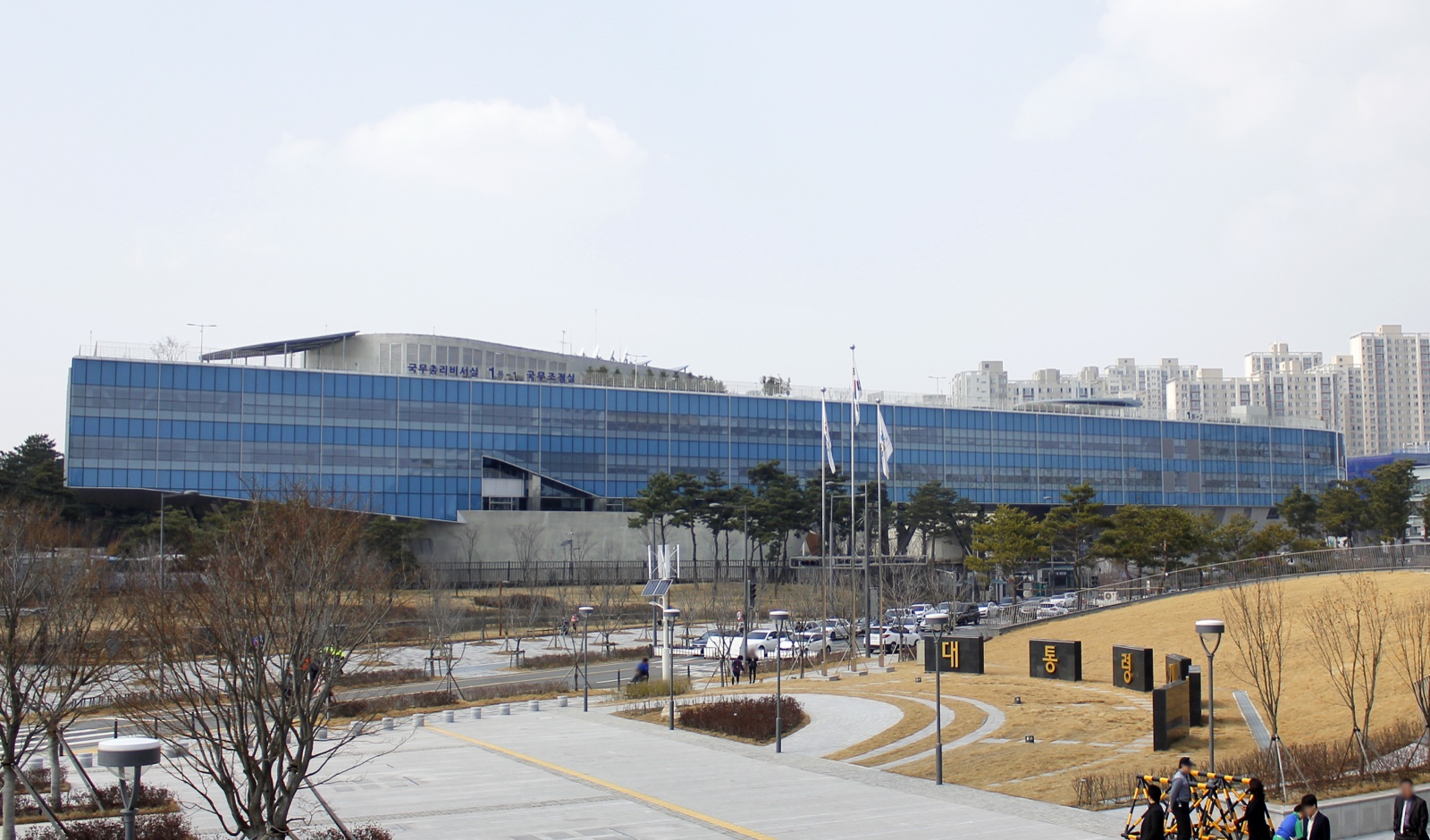
Photo: Minseong Kim · File:Office of Government Policy Coordination South Korea.jpg · CC BY-SA 4.0
On November 21, the budget adjustment subcommittee of the National Assembly's Special Committee on Budget and Accounts put off its review of next year's budget for local love gift certificates. The government's proposal sets national funding for these certificates at 1.45 trillion won. That is 300 billion won more than this year's 1.15 trillion won. The People Power Party (PPP) called for cutting the increase, citing large returns last year, while the Democratic Party of Korea (DP) called for keeping the government's proposal. The constitutional deadline for passing the budget is December 2.
Local love gift certificates are vouchers that local governments sell at a discount for use only at shops in their area. The national and local governments share the cost of the discount. Next year, the national support rate, the share the national government pays, ranges from 3% to 9% depending on the region. Adding 5% in local funds, buyers get discounts of 8% to 14%.
What changes if 300 billion won more is spent? Has the government given the basis for it?
The government has not presented numerical evidence of how large the effect would be. The review report by the expert adviser of the National Assembly's Public Administration and Security Committee records this. The Ministry of the Interior and Safety explained that raising the discount rate would likely have an effect. But it answered that it has no analysis of how much certificate sales and small business revenue would rise if the national support rate were raised. It said it would do that analysis through a commissioned study this year. It drew up the increase before the results of an effect analysis came out.
Spending results do not support the increase either. According to the report, local governments returned 205.9 billion won of the 999.6 billion won in national funds they received last year. The return rate was 20.6%. Gwangju returned 53.2% of the money it received, and Busan returned 40.4%. The expert adviser pointed out that these results may show the gap between expected and actual demand.
How much new spending the certificates create also needs to be examined separately. The report said it cannot be concluded that new spending arose to the extent that certificate payments increased. Payments that would have been made in cash or by card may have switched. Spending from neighboring areas may also have moved over.
To be sure, the explanations of the government and the ruling party also have grounds. Last year's returns were partly due to the money arriving late. The government's 2025 budget proposal contained no national funds for the certificates; 400 billion won was added in the first supplementary budget and 600 billion won in the second. Some local governments raised their discount rates only in September. In 2024, when national funds were in the main budget, returns were 21.8 billion won. Based on a May survey of local government demand, the ministry set the volume of nationally funded certificates to be issued at 24 trillion won. The expert adviser also described as "positive" the move to vary support rates by regional fiscal conditions. DP lawmaker Hwang Myeong-seon said, "Local currency plays a role in a virtuous cycle structure for the local economy."
Whether last year's returns were due to late money can be determined from this year's results. This year, national funds were in the main budget from the start. Vice Minister of the Interior and Safety Kim Min-jae said, "This year, the spending rate so far is over 80%," and said the ministry would raise it to 95% or more by year-end. But he did not say whether this 80% was counted on the same basis as last year's actual spending rate of 79.4%. The actual spending rate is the share of national funds received that was actually spent. And even a high spending rate does not prove that the certificates created new spending.
The added 300 billion won should be allocated after seeing this year's year-end results and the effect analysis. The point of the review report, as reported by the Korea Economic Daily, is the same. Raising the budget without enough review would leave more money unspent and make it harder to use public funds efficiently. The expert adviser called for setting the size of national funding and the support rate based on the commissioned study's results and past spending results.
The Special Committee on Budget and Accounts should not pass the increase without conditions. If it does not cut the increase now, it should at least attach conditions on how it is spent. This year's year-end spending rate is to be reported on the same basis as last year's. The Ministry of the Interior and Safety is to present standards for how each local government's demand and spending results are reflected in allocations. Regions with high return rates are to submit new demand forecasts. The commissioned study's results are to be made public before the next budget review. These four conditions should be written into the supplementary opinions.
The Special Committee on Budget and Accounts will decide by December 2 whether to cut the increase or attach conditions to it. Either way, the spending conditions for the increase and the schedule for the effect analysis should remain in the review results.
Translated from the Korean original published on November 22, 2026.
Korean original: 2059억 원 남겨 반납한 상품권 예산에 3000억 원을 더 얹을 때인가